

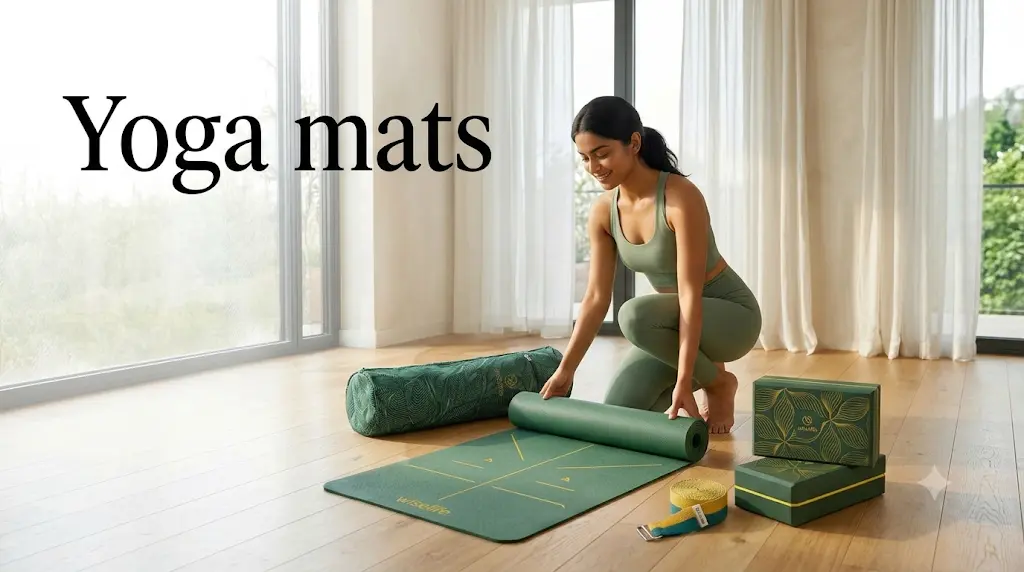
Yoga mats do far more than protect you from a hard floor: they set the tone for your whole practice. A good one gives you the confidence to move deeper into poses, while a poor one keeps you distracted by slipping hands, sore knees or a strange smell. Whether you practise at home, in a studio or outdoors, the right mat turns any space into a place where you can slow down and breathe.
Key Takeaways
- Choose a mat by matching material, thickness and grip to your practice style, not by colour or price alone.
- Around 4 to 6 mm suits most people, with thinner mats for balance and thicker ones for joint comfort.
- Wipe your mat after use and replace it when grip fades or the surface starts to peel.
Why Your Yoga Mats Matter
Yoga mats look simple, yet the right one can change how safe, stable and comfortable every session feels. A mat that slips in Downward Dog or leaves your knees aching in a lunge makes practice harder than it needs to be. This guide explains what really matters when buying one, so you can choose with confidence.
The Big Four: What to Compare
Yoga mats come in a wide range of materials, thicknesses and textures, so choosing the right one depends on how you practise.
1. Material
Material affects grip, weight, durability and environmental impact.
- PVC: Very sticky and long-lasting, but not biodegradable. A good pick for precise, alignment-focused practice.
- TPE: Lightweight and a more eco-friendly alternative to PVC, with good grip. Popular for beginners and everyday use.
- Natural rubber: Excellent grip, even when you sweat, and biodegradable, but heavier and unsuitable for anyone with a latex allergy.
- Cork: Naturally resistant to microbes, and grip often improves when it gets damp, making it popular for hot yoga.
- Cotton: Breathable and washable, but with less grip and cushion. Often used for restorative or traditional practice.
- NBR foam: Soft and cushioned, good for gentle floor work, though grip is usually lower.
2. Thickness
Thickness changes how your joints feel and how stable you are in balancing poses.
- 1 to 3 mm: Ultra-thin travel mats that fold easily but offer little cushion.
- 4 to 5 mm: The all-rounder range, suiting most styles from Vinyasa to Hatha.
- 6 mm and above: Extra padding for sensitive knees, wrists and hips, though balance poses can feel wobbly.
A simple rule: the thicker the mat, the more comfort but the less connection to the floor.
3. Grip and Texture
Grip keeps you safe, especially if you sweat. Sticky PVC and natural rubber grip well on their own. Textured surfaces add traction, and a yoga towel on top helps in hot or sweaty classes. If your hands slide forward in Downward Dog, grip should be your first priority.
4. Size and Weight
Standard mats are about 68 inches long and 24 inches wide. If you’re tall, look for an extra-long mat of 72 inches or more, and if you like space for arm balances, a wider one helps. Remember that thicker, denser mats are heavier, which matters if you carry yours to class.
Match the Mat to Your Practice
- Vinyasa and Ashtanga: A grippy, mid-thin mat keeps transitions secure.
- Hatha and beginners: A medium thickness balances comfort and stability.
- Yin and restorative: A thicker, softer mat supports long floor holds.
- Hot yoga: Pick a mat that grips when wet, or layer a towel on top.
- Travel: A thin, foldable mat saves space and weight.
Often-Missed Factors Worth Checking
Most guides stop at material and thickness, but a few extra details can make or break your choice:
- Your floor. Hard tile or wood may call for extra thickness, while carpet can make a thin mat feel unstable.
- Closed-cell vs open-cell surfaces. Closed-cell mats resist sweat soaking in and wipe clean more easily.
- Smell. New PVC and rubber mats can carry a strong odour for the first few days, so air them out.
- Allergies. Avoid natural rubber if you have a latex allergy.
- Storage space. A thick mat takes more room to roll up and keep at home.
How to Care for Your Yoga Mats
A little upkeep makes any mat last longer and stay hygienic.
- Wipe it down after each session with a damp cloth and a mild cleaner.
- Let it air dry fully before rolling, since trapped moisture encourages bacteria and odours.
- Avoid harsh chemicals and long spells in direct sunlight, which can break down the surface.
- Roll it loosely rather than folding it to prevent creases.
- Wash cotton mats according to the label.
When to Replace Your Yoga Mats
Most mats wear out eventually. Replace yours if the surface is peeling or flaking, grip has faded even after cleaning, or you notice thin patches where your hands and knees land. A mat that slips can cause injuries, so don’t hold on to one that has had its day.
A Quick Buying Checklist
- Decide your main practice style and how often you practise.
- Pick a thickness that balances comfort and stability for your joints.
- Choose a material that suits your grip needs, budget and values.
- Check size, weight and portability.
- Look for care instructions and any allergy warnings.
Final Thoughts
Choosing among yoga mats comes down to a few clear questions: how you practise, how much cushion your joints need and how much grip you want. Get those right, and your mat becomes a quiet, reliable foundation for every session. Start with the basics, pay attention to your floor and care for your mat, and it will support your practice for years.
FAQs
1. What thickness is best for yoga mats?
Around 4 to 6 mm suits most people, with thinner mats for balance and thicker ones for extra cushioning.
2. What is the best material for yoga mats?
It depends on your needs: PVC for durability and grip, TPE for a lightweight eco-friendlier option, and natural rubber or cork for sweaty practice.
3. Are thicker yoga mats better?
Not always, since extra cushioning eases joints but can make standing and balancing poses feel less stable.
4. How often should you clean a yoga mat?
Wiping it after every use is a good habit, and regular cleaning of yoga mats matters for your skin.
Also Read: Yoga at Home
By Umesh Kumar Khiri
