

By Life Positive
May 2011
Worshippers of the divine feminine met at the International Festival of Sacred Arts recently at the Crafts Museum in Delhi to explore goddess worship in all its aspects.
The three-day festival, which was held for the third consecutive year, was focussed on the theme, Devi – An Exploration of Goddess Worship. It comprised lectures, teachings, performances and craft demonstrations. Dr Nilima Chitgopenkar, an associate professor of history at the Jesus and Mary College chaired the session on goddesses of the Hindu pantheon. “Kali provides her worshippers with a certain mood and ethos, Durga’s eyes are puffy and wide in rage and fury and Saraswati looks benign in her appearance. Goddesses provide us with a spell-binding variety, ranging from the macabre to the sublime,” she said.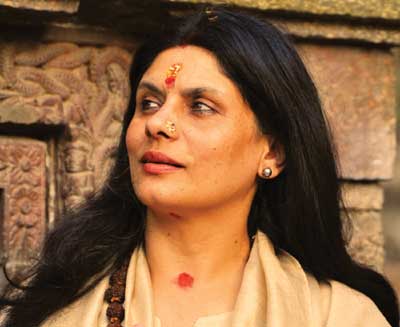
Author Shambhavi Chopra also spoke at the event Raza Rumi, a well-known writer from Pakistan, examined the existence of a cult of the divine feminine in the Sindh province of Pakistan. He said, “The tumultuous events of 1947 that saw a massive exodus of the Sindhi Hindus and the Sikhs from the province have not affected the historical patterns of cult worship in the region. We also see ascendency of the feminine reflected in the Sufi poetry of Shah Abdul Latif Bhatai.” Professor Madhu Khanna, director, Centre for the Study of Comparative Religions, Jamia Millia University, spoke on the Tantric Mahavidya goddesses and their manifestations of feminine power. “These goddesses have the power to subjugate, immobilise, cause friction, pacify, and bestow peace and good fortune. Can they become the role models for women today?,” Khanna asked.
David Frawley, also known as Pandit Vamadeva Shastri, director of The American Institute of Vedic Studies, shared his views on maintaining a connection with nature’s shakti: water, air, fire and earth. “Unless and until we strip ourselves down to nothing we won’t be able to tune with the movement of nature,” said Frawley.
Visionary and director of the spiritual and humanitarian organisation, Khachodling, Khandro Thrinlay Chodon, spoke on the feminine principle in Buddhism during the teaching session. “The presence of the feminine is everywhere. It’s about feeling and recognising it. The feminine principle is about making your own ground. Pretence has no place in religion and being original is real dharma. When a man comes to peace with himself, he naturally becomes peaceful with his friends, neighbours and relatives,” Chodon said.
The event also saw the ‘Mystic Force of Devi’, a Carnatic vocal recital by Ranjani and Gayatri, and ancient songs and hymns from Tibet sung by Ani Choying Drolma to Tara, the goddess of compassion. There was also Haraoba, a Manipuri dance performance, by Meitei Jagoi.
