

In a world awash with global summits and grand declarations held in plush hotel halls, the solution to the planet’s most urgent crisis may, quite simply, be fermenting quietly in a backyard kitchen garden. Conventional climate discourse often centers on what governments and powerful institutions can achieve, resulting in little more than symbolic gestures, with action notoriously lagging behind ambition. So, what if the real climate revolution began not in the air-conditioned halls of UN conventions but with daily, mindful experiments in our own homes?
A quiet transformation is taking place in our backyard kitchen garden, a space once devoted solely to plants and composting has now evolved into a living laboratory for bioenzyme creation. What began as a modest sustainability experiment has turned into a daily engagement with the subtle alchemy of nature, prompting deeper reflection on what real climate action looks like.
From Mixed Waste to Microbial Symphony
My journey began much like that of many well-intentioned citizens. For years, I simply mixed all kitchen waste together and sent it to our family’s biogas digester, content in the hope that something good was happening for the planet. It worked efficiently in producing methane for cooking, reducing our dependence on LPG cylinders, and keeping organic matter out of landfills. But a question kept tugging at me: was I truly unlocking the full transformative potential of each type of organic residue, or simply opting for a lowest-common-denominator solution?
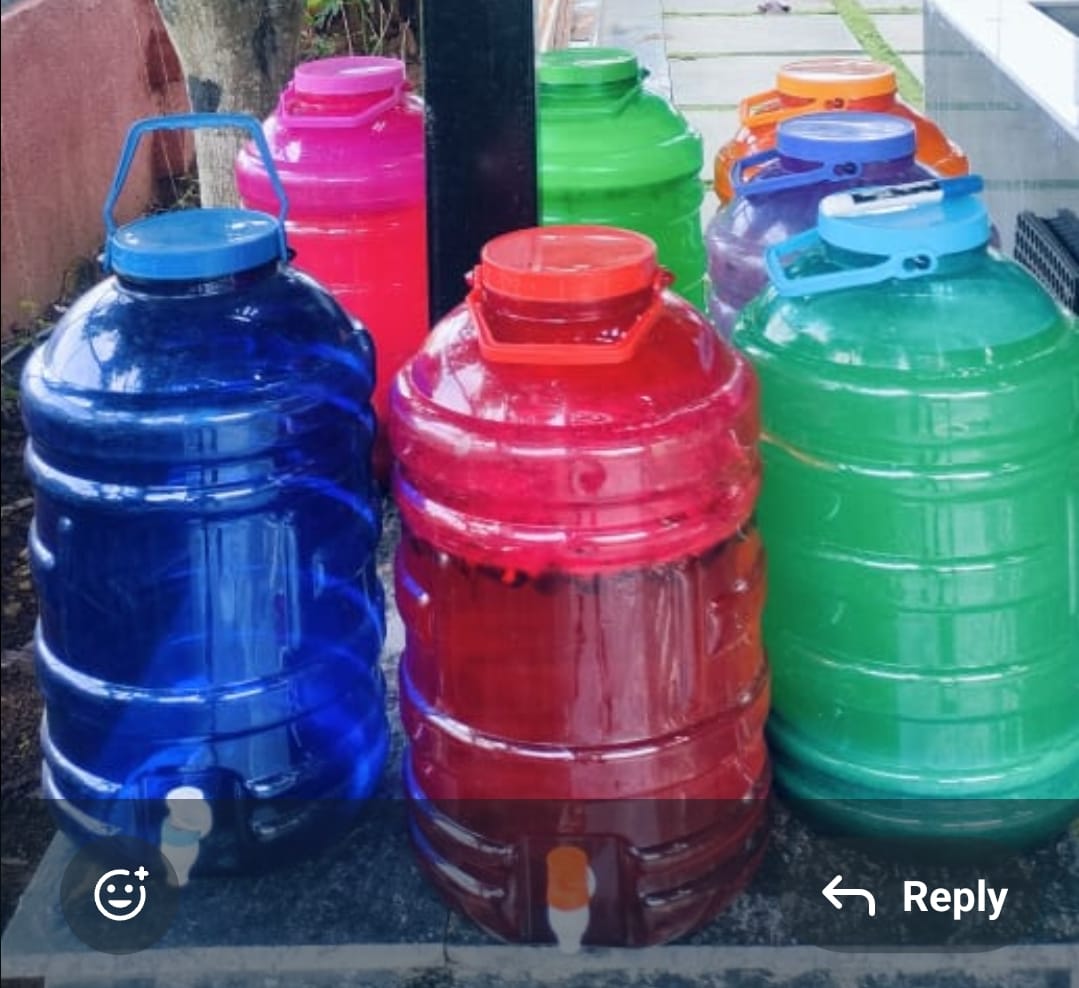
Are we, as citizens s, underestimating the transformative power of nuanced, hands-on climate action? As I grew curious about the unique properties of different plant-based residues, my kitchen became a living laboratory. Today, separate 20-liter containers ferment the peels of banana, citrus, onion and garlic, along with fruits, flowers, and tea waste, each with its own microbial symphony, each releasing a distinct fragrance, each an experiment in ecology and self-reliance.
The variations are remarkable. Citrus peels give a fresh, tangy scent that cuts through the air. Onion and garlic ferments produce strong, pungent enzymes with powerful cleansing properties. Fruit and flower residues yield a sweet, earthy aroma that speaks of gardens and growth. Each container carries its own texture and microbial story, turning daily organic waste into gentle, natural cleansers and soil boosters.
The Practical Art of Enzyme-Making
The process itself has become a meditative practice. Small waste containers sit in the kitchen, collecting daily residues—a banana peel here, tea leaves there, citrus rinds from the morning juice. Once filled, we grind the waste into a fine paste before transferring it to the larger jars. This grinding step is crucial; it significantly hastens microbial activity and smoothens fermentation, breaking down cell walls and making nutrients more accessible to the fermenting organisms.
To accelerate the process, I use a combination of jaggery and dry yeast. The jaggery provides the sugars that feed the microorganisms, while the yeast jumpstarts the fermentation. Since the containers receive fresh additions almost every day, gas formation starts quickly—an indicator of active biological breakdown. The containers bubble and hiss with life, a reminder that we are never alone, that billions of microscopic workers are constantly transforming matter around us.
What began with a single one-liter Bisleri bottle has now expanded into a micro-lab with multiple 20-liter jars, each fitted with a small tap that allows easy collection of the mature bioenzyme liquid. This liquid serves multiple purposes: as a natural cleanser for floors and bathrooms, as a soil conditioner for potted plants, and as a gentle alternative to the harsh chemical products that dominate store shelves.
Zero Waste, Full Circular Economy
Today, no wet waste leaves our home, only plastic, drastically reducing our domestic carbon footprint. This simple fact represents a fundamental shift in consciousness. When you know that every orange peel, every wilted flower, every spoonful of leftover tea has a purpose and a future, waste itself ceases to exist. It becomes resource. It becomes possibility.
But this raises uncomfortable questions about the larger climate discourse. Why is climate action still perceived as the domain of officials with microphones, or as something that only large-scale technologies can address? Grand summits and UN conventions, often held in five-star hotels with elaborate meals and air-conditioned plenaries, make global headlines but frequently fall short of tangible, grassroots results. Symbolism is easy, but does it change daily reality?
The Failure of Symbolic Action
The truth is stark: while conferences deliver promises, home experiments yield results. Research shows that household-level actions can account for massive emission reductions globally by mid-century, yet there persists a gap between what is possible and what is prioritized in national climate plans. Barriers like lack of awareness, affordability, and practical feasibility prevent households from making radical, high-impact changes, but perhaps the greatest barrier is simply imagination.
Can we, as citizens, afford to wait for the next conference to bring change? Doesn’t this beg the question: are we waiting for the world to change while holding in our own hands the very tools to begin today? Why rely on symbolic gestures when hands-on, localized climate action demonstrably works? What if every household became a hub of innovation, curiosity, and low-impact living?
The environmental benefits extend far beyond personal satisfaction. Household bioenzyme production transforms organic waste into eco-friendly cleaners, reduces dependence on toxic chemicals, decreases groundwater and soil pollution, and enriches domestic gardens and farms with enzyme-rich nutrition. Unlike industrially produced synthetic cleaners, bioenzymes are non-toxic, biodegradable, and leave no harmful residue in water or soil. They work with nature’s rhythms, not against them.
A Living Classroom
The process has turned waste management into a living classroom, blending science, sustainability, and self-reliance in the most practical way. Every day brings new observations: the rate at which different materials break down, the varying colors and consistencies of the liquids produced, the seasonal changes in fermentation speed, the interplay between temperature, moisture, and microbial activity.
My experiment continues, and I remain open to exploring other microbial cultures beyond yeast—perhaps adding lactic acid bacteria or effective microorganisms to further diversify the enzyme profile. Each experiment deepens appreciation for how nature’s smallest workers quietly sustain the circle of life, turning what we discard into a resource of renewal.
For climate thinkers and grassroots innovators, the kitchen garden even in balcony, not the gala, is our truest workshop. Are we ready to bring the movement home? What stands in the way of every house becoming a micro-laboratory for ecological solutions? Are information gaps, cost, or inertia the real constraints, or is it a crisis of imagination?
If even a fraction of homes adopted similar practices, how much less landfill, pollution, and wasted opportunity would we see? Are we ready to move from symbolic engagement to substantive transformation? Or will we leave climate action to policymakers, while the real work—quiet, local, continuous—remains undone?
The answers, perhaps, are already bubbling away in backyard jars everywhere, waiting for us to open the tap, collect the solution, and get our hands dirty for a better planet. Climate action must start at the household level, in the daily choices we make, in the waste we refuse to waste, in the enzymes we cultivate with our own hands. The revolution will not be televised from a five-star conference hall. It will ferment, quietly and powerfully, in kitchens and gardens across the world.
By Pritam Kumar Sinha
