

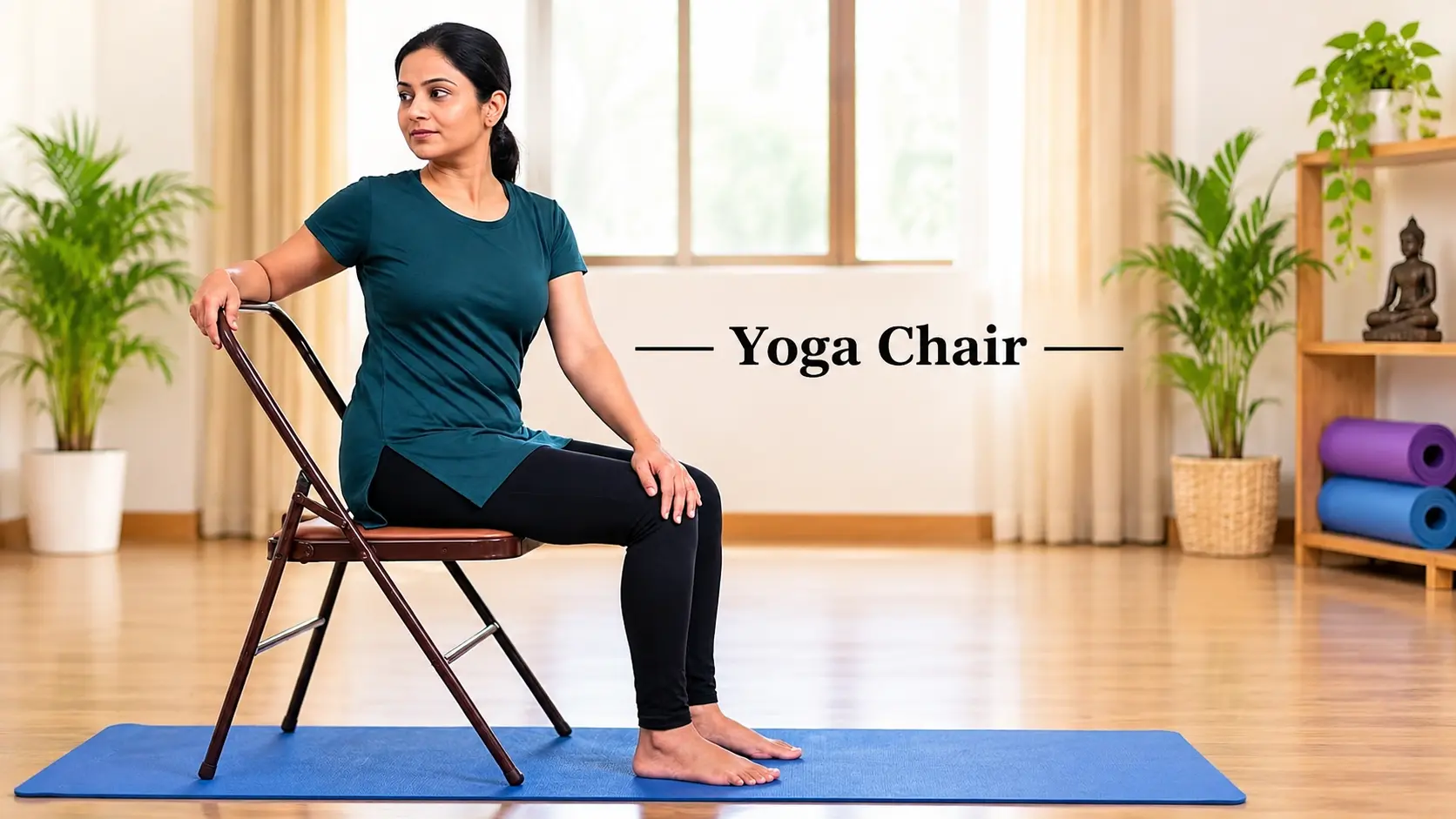
A yoga chair is one of the most useful and least understood props in a home practice. It looks like a plain folding seat, yet it can steady your balance, support your back in twists and let you try poses that feel out of reach on the floor. This guide explains the main types, what to check before buying and how to use one step by step.
Key Takeaways
- Know the three types: Open-back folding chairs, inversion benches and floor meditation chairs each serve a different purpose.
- Stability comes first: Look for a sturdy steel frame, non-slip feet and a clear weight limit.
- Learn inversions with guidance: Chair-supported shoulderstand is best tried with a qualified teacher.
What Is a Yoga Chair and Why Use One?
A yoga chair is an ergonomic device that will help you maintain proper alignment of your body in different poses. Typically, it is a sturdy chair made of steel with an open back; this way, your arms or legs can pass through it. It will serve as a mobile floor, wall against which you can press or support your arms, legs, or back. It is very helpful for beginners, senior practitioners or people who have some physical issues, such as stiffness or lack of confidence. Moreover, it can be useful for more advanced students to improve their practice.
The Main Types of Yoga Chairs
1. Open-back folding chair: This one is the most multifunctional chair. Due to its open back and high crossbars, you can thread your legs through, lie back onto it, use it as a backrest and so on. It is good for twisting, forward bending, backbend or balancing poses.
2. Inversion or headstand bench: This device is a frame with the back and legs pads and a space for your head. You will be able to support yourself in headstand position without any pressure on your neck.
3. Floor meditation chair: A low seat with a backrest, designed for comfortable sitting on the ground. It suits meditation, breathing practice and anyone who finds cross-legged sitting hard on the back or knees.
What to Check Before You Buy
- Frame strength: Steel is the standard. Powder-coated or tubular steel resists wear.
- Weight capacity: Choose one comfortably above your body weight, especially for inversions. Typical ratings range from about 100 to 115 kg, with some higher.
- Non-slip feet: Rubber or capped feet protect floors and stop movement.
- Seat height and crossbars: Raised bars give more room to slide legs underneath.
- Foldability: Folding models store neatly and travel well.
- Padding: For inversion benches, dense, easy-clean cushioning matters.
Before every session, check bolts, joints and feet for looseness or damage.
How to Use a Yoga Chair in Common Poses
Place the chair on a flat, non-slip surface, ideally against a wall for extra stability. Move slowly and stop if anything pinches or strains.
1. Seated Twist (Bharadvajasana)
- Sit sideways on the chair with the backrest at your right.
- Inhale to lengthen your spine, then exhale and turn toward the backrest.
- Hold the back with both hands, breathe for five breaths and switch sides.
2. Standing Forward Fold (Uttanasana)
- Stand facing the chair with your feet hip-width apart.
- Hinge from your hips and rest your forearms or forehead on the seat.
- Let your neck relax and stay for five to eight breaths.
3. Standing Hand-to-Big-Toe Pose (Utthita Hasta Padangusthasana)
- Stand facing the chair and place one heel on the seat.
- Keep the raised leg straight and the standing leg firm.
- Fold forward from the hips and hold for five breaths before switching.
4. Supported Bridge Pose (Setu Bandha Sarvangasana)
- Lie on your back with your calves resting on the chair seat.
- Press into your heels to lift your hips slightly, with arms relaxed.
- Lower down and rest for one to two minutes.
5. Chair-Supported Shoulderstand (Salamba Sarvangasana)
- Place a folded blanket on the seat and sit through the chair, facing the backrest.
- Lie back so your shoulders rest on the blanket and hold the chair legs.
- Lift your legs only if your teacher has shown you how, then come down slowly.
6. Corpse Pose (Savasana), Legs Supported
- Lie on your back and rest your calves on the seat.
- Let your knees soften and your arms rest by your sides.
- Close your eyes and stay for five to ten minutes.
Safety Tips
- Use the chair on non-slip flooring or a sticky mat, and keep it away from loose rugs.
- Pad the seat with a folded blanket when pressing bones against metal.
- Avoid inversions if you have neck problems, glaucoma or uncontrolled high blood pressure unless a doctor and a qualified teacher approve.
- Never use a damaged chair for weight-bearing poses.
How to Care for Your Yoga Chair
Wipe the frame with a slightly damp cloth and dry it fully to prevent rust. Wash removable covers according to their label. Fold and store the chair upright in a dry place, and tighten any loose bolts regularly.
Final Thoughts
The best yoga chair is the one that fits your practice, your space and your comfort level. Start with a sturdy open-back folding model, check its stability, and try a few supported poses with care. As your confidence grows, you’ll find it opens up postures and sitting positions you may have thought were out of reach.
FAQs
1. What is a yoga chair used for?
It supports your body in poses such as twists, forward folds, standing balances and backbends. Some designs are made for inversions, while others suit meditation.
2. Is a yoga chair good for beginners and older adults?
Yes. The chair provides stability and reduces strain, helping people with limited flexibility or balance build confidence safely.
3. Can I use a regular chair for yoga?
A sturdy, non-slip chair works for simple seated and standing poses, but it lacks the open back and reinforced frame of a yoga chair. Avoid ordinary chairs for weight-bearing or inverted poses.
4. Where does the yoga chair come from?
Chair yoga, or accessible yoga was popularised in Iyengar yoga, which uses props to teach precise alignment.
Also Read: Yoga pants for women
By Umesh Kumar Khiri
