

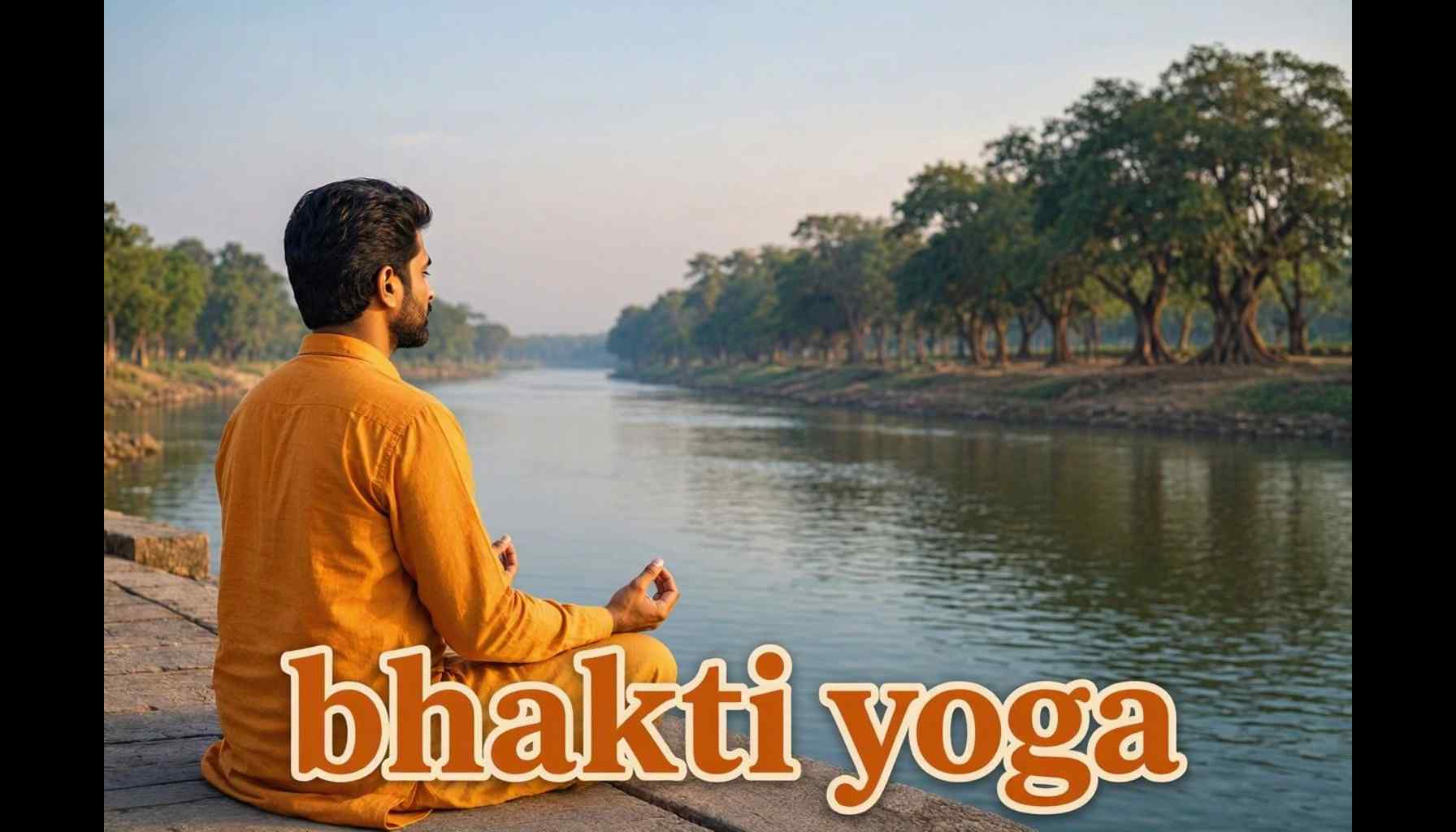
Bhakti Yoga is a devotional path centered on cultivating a deep, loving connection with the Divine through prayer, chanting, and selfless action.
In a world increasingly shaped by intellectual analysis, transactional relationships, and material striving, many spiritual seekers find themselves feeling emotionally disconnected. While physical yoga disciplines the body and philosophy engages the intellect, Bhakti Yoga addresses the deep innate longing of the human spirit: the desire for authentic, unconditional love and divine connection.
Key Takeaways:
- Bhakti Yoga transforms human emotion into pure divine love.
- Practicing Navadha Bhakti purifies ego and builds character.
- Daily chanting and surrender cultivate lasting inner peace.
Origin and Philosophy of Bhakti Yoga
The word Bhakti stems from the Sanskrit root Bhaj, which means “to belong to,” “to serve,” or “to share.” Bhakti Yoga is formally outlined in foundational scriptures such as the Bhagavad Gita, the Srimad Bhagavatam, and Sage Narada’s Bhakti Sutras.
Bhakti Yoga is universal and available to all. In Bhakti Yoga, one is made to understand that God is not an alien judge who is sitting somewhere far from us, but it is the innermost presence of love that resides in every individual. By offering one’s innate love for God, the devotee unites with the Supreme continuously.
The Essence of Devotion: Understanding the path of love means recognizing that true devotion begins with selflessness, surrender, and non-attachment. It transforms human affection into a spiritual bridge that connects our individual soul to the universal Divine.
Core Bhagavad Gita Verses on Bhakti Yoga
- Chapter 9, Verse 26:
“Whosoever offers Me with devotion a leaf, a flower, a fruit, or water, I accept that loving gift from a pure-hearted soul.”
- Chapter 18, Verse 55:
“Through devotion alone one comes to know Me in truth, and knowing Me in truth, one immediately enters into My divine presence.”
Navadha Bhakti: The Nine Forms of Devotion
The Srimad Bhagavatam categorizes devotional practice into nine distinct expressions known as Navadha Bhakti. Practitioners can focus on any of these expressions according to their unique nature:
| Form of Bhakti | Meaning | Primary Practice | Impact on the Practitioner |
| Shravana | Listening | Hearing divine glories, scriptures, and sacred stories | Cleanses the mind of negative impressions |
| Kirtana | Chanting & Singing | Singing sacred mantras, songs, or Kirtan in a group | Channels emotions into outward divine joy |
| Smarana | Remembering | Keeping continuous remembrance of the Divine | Keeps spiritual awareness active throughout daily chores |
| Padasevana | Serving the Feet | Serving humanity, sacred altars, and creation | Destroys vanity and instills deep humility |
| Archana | Ritual Worship | Offering flowers, light, water, or incense with love | Directs physical senses toward a sacred focus |
| Vandana | Prayer & Obeisance | Offering humble prayers and bows of gratitude | Softens the heart and eliminates pride |
| Dasya | Servitude | Cultivating the attitude of a loving, faithful servant | Aligns personal will with divine will |
| Sakhya | Friendship | Relating to God as an intimate, trusted friend | Builds absolute trust and comfort with the Divine |
| Atmanivedana | Self-Surrender | Complete offering of one’s soul, body, and actions | Grants total liberation and God-realization |
Practising Bhakti Yoga: Techniques
Incorporating devotion into modern life requires simple, consistent habits rather than elaborate rituals:
1. Japa Meditation (Mantra Recitation):
- Sit comfortably with a quiet mind and grasp a mala (a string of prayer beads) in your right hand.
- Recite a chosen sacred mantra (for example, “Om Namo Narayanaya”) with mindfulness and devotion with each bead.
- Meditate upon the divine name in a subtle vibration way for 10-20 minutes every day to clear mental clutter and connect your heart with stillness.
2. Kirtan & Bhajan (Devotional Singing):
- Get together in a circle or sit by yourself in a sacred place and sing with an open heart.
- Sing divine names or mantras with call and response method with sincerity, without any hesitation concerning your voice.
- Rhythmic vibrations will liberate you from stress in your daily activities.
3. Smarana & Gratitude (Daily Remembrance):
- Place a sacred image or reminder on your desk, phone wallpaper, or home altar.
- Pause briefly before meals or new tasks to offer a silent prayer of gratitude.
Duration and Frequency
Practice Bhakti Yoga daily through short 15-to-30-minute sessions of chanting or prayer.
Benefits of Bhakti Yoga
- It helps relieve emotional tension and melts hardened mental attitudes.
- Helps gain inner security due to continuous presence of God.
- Purifies the heart from all jealousy, anger, and vanity.
- Increases empathy and love for all living beings.
Importance of Bhakti Yoga in Building Character
Devotion is not mere emotionalism; it is a transformative force that shapes human character:
- Removes Pride: The knowledge of the existence of a divine power helps remove pride and creates humility.
- Develops Compassion for All: Since a bhakta considers everyone a manifestation of the Divine, compassion becomes the result.
- Develops Emotional Strength: Belief in divine providence gives a person the emotional strength to face adversity.
Precautions
To maintain a balanced and authentic practice, keep these points in mind:
- Do Not be Dogmatic or Fanatical: Genuine devotion encompasses all religious paths and recognizes the same Divine in all practices.
- Combine Devotion with Philosophy: Combine devotion with the philosophical knowledge of Jnana so as not to remain merely emotionally driven.
- Complete Your Daily Obligations: Do not allow yourself to neglect your worldly responsibilities in the name of spirituality.
Summing Up
Bhakti Yoga offers a joyful and direct path to inner freedom by turning our capacity to love toward the Supreme. By engaging in simple daily practices like mantra chanting, sacred music, and selfless surrender, we dissolve the barriers of ego and anxiety. Ultimately, walking the path of devotion fills our daily existence with lasting peace, deep compassion, and divine grace.
Frequently Asked Questions (FAQs)
1. What does Bhakti Yoga mean?
Bhakti Yoga is the path of devoted love, spiritual connection, and surrender toward the Divine.
2. How can I practice bhakti?
You can practice Bhakti Yoga through prayer, chanting mantras, singing kirtan, selfless service, and keeping a loving heart in daily actions.
3. What are the 9 modes of Bhakti Yoga?
The nine modes (Navadha Bhakti) are hearing (Shravanam), chanting (Kirtanam), remembering (Smaranam), serving (Pada-sevanam), worshiping (Archanam), praying (Vandanam), servitude (Dasyam), friendship (Sakhyam), and complete self-surrender (Atma-nivedanam).
4. Is bhakti yoga difficult?
No, Bhakti Yoga is considered one of the most accessible yoga paths because it focuses on sincere love.
Also Read: Kriya Yoga
By Umesh Kumar Khiri
