

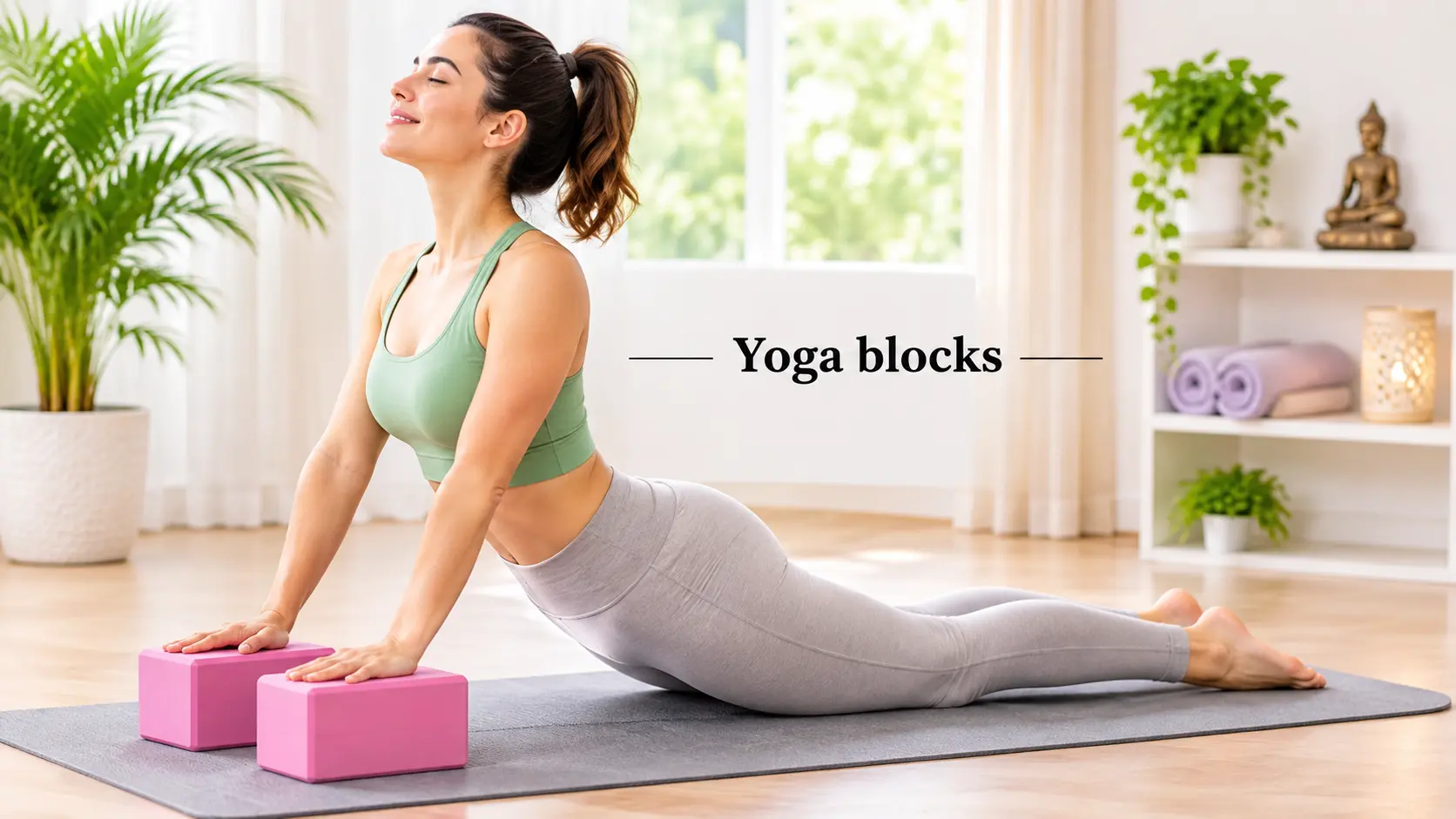
Yoga blocks are simple rectangles of foam, cork or wood, yet they can change how a pose feels from the first breath. They bring the floor closer, steady your balance and let you stay in a position long enough to benefit from it. Whether you’re stiff, strong, new or experienced, the right block makes your practice safer and more comfortable.
Key Takeaways
- Pick by purpose: Foam is soft and light, cork is firm and grippy, and wood is hard and stable.
- Start with a pair: Two matching blocks give you symmetry and more ways to support your body.
- Use them early, not late: Props are tools for better alignment, not a sign that you’re behind.
What Are Yoga Blocks and Why Do They Matter?
Yoga block is an object that helps support the body in the pose. There are three main things it does. Firstly, it increases the distance to allow you to keep the spine elongated and not fold towards the ground. Secondly, it gives you a solid base to stand on while balancing in a pose. And lastly, it allows you to be comfortable in the position, especially in the case of restorative practice, without having to use any effort with the muscles. As all blocks have three different sides where you can place it, each block provides three different heights.
Foam, Cork and Wood: How Do the Materials Compare?
- Foam is the lightest and softest material. It is soft on the body and easy to carry and doesn’t hurt your feet if it falls.
- Cork is heavier and denser. It is hardly ever compressible, making you feel secure with your hands when practicing standing poses. In addition, the natural texture gives you a grip, even if your palms are damp. It is costlier than foam, and its heaviness makes it unpleasant to bring to class.
- Wood, usually bamboo or pine, is the hardest and most stable of the three. It works well for strong, steady support and for strength-focused uses. It’s also the least cushioned, so it can feel harsh under bony areas. A smooth finish with rounded edges matters here.
How Do You Choose the Right Size and Height?
Standard blocks measure about 22 cm long, 11–12 cm wide and 7–8 cm thick. That works for most adults. Think about three things:
- Hand size and reach: Larger hands and longer limbs often prefer a bigger block, while smaller hands may find slim “lean” blocks more comfortable to grip.
- Flexibility: If your hamstrings are tight, you’ll benefit from taller settings. If you’re very flexible, lower heights are often enough.
- Portability: Mini or lean blocks suit travel and small homes, and they work well for children.
How to Use Yoga Blocks in Common Poses
Set the block up before you move into the pose, and start at the lowest height that works. Raise it only if you can’t keep your spine long.
1. Triangle Pose (Trikonasana)
- Stand with your feet a leg’s length apart and place a block outside your front foot.
- Reach forward over your front leg, then lower your hand to the block.
- Open your chest toward the ceiling and breathe for five to eight breaths.
2. Half Moon Pose (Ardha Chandrasana)
- From Triangle Pose, place a block about a foot in front of your front foot.
- Bend your front knee, rest your hand on the block and lift your back leg to hip height.
- Stack your hips, open your chest and hold for three to five breaths.
3. Standing Forward Fold (Uttanasana)
- Stand hip-width apart with a block in front of you on its high setting.
- Hinge from your hips and rest your fingertips or palms on the block.
- Soften your knees, relax your head and stay for five slow breaths.
4. Chair Pose (Utkatasana)
- Stand with your feet hip-width apart and a block between your thighs.
- Bend your knees and sit your hips back as if lowering onto a chair.
- Squeeze the block gently, reach your arms forward and hold for five breaths.
5. Supported Bridge Pose (Setu Bandha Sarvangasana)
- Lie on your back with your knees bent and feet flat, then lift your hips.
- Slide a block under your sacrum on the low or medium height.
- Rest your weight on the block and breathe slowly for one to three minutes.
6. Reclining Bound Angle Pose (Supta Baddha Konasana)
- Sit with the soles of your feet together and your knees wide.
- Place a block under each knee, then lie back slowly.
- Rest your hands on your belly and stay for three to five minutes.
7. Staff Pose (Dandasana)
- Sit on the edge of a block with your legs extended in front.
- Press your thighs down and lengthen your spine upward.
- Rest your hands beside your hips and hold for five breaths.
Safety Tips to Remember
- Place blocks on a flat, non-slip surface, ideally on your mat.
- Test the block with a little weight before committing fully.
- Never use a block under your head or neck for inversions unless a qualified teacher has shown you how.
- Move out of a pose if you feel sharp pain, numbness or pinching.
- Replace foam that has dented or become uneven.
Final Thoughts
The best yoga block is the one that supports the way you practise. Start with a pair that matches your needs, test the height in a few poses and look after them well. In return, they’ll help you move with more ease, hold poses with more confidence and enjoy your time on the mat.
FAQs
1. What are yoga blocks used for?
They support your body, extend your reach and help you hold poses with better alignment. Common uses include raising the floor in standing poses, lifting the hips for seated work and providing gentle support in restorative sequences.
2. How many yoga blocks do I need?
Two is ideal for most people, since it lets you support both sides of the body evenly. One can be enough for simple standing poses, while four suits teachers and longer supported sequences.
3. Should beginners use yoga blocks?
Yes. Blocks help new practitioners learn good alignment without straining. Using one is a sign of smart practice, and many experienced students keep using them for years.
4. Are cork yoga blocks better than foam?
Neither is better overall. Cork is firmer, heavier and more stable for weight-bearing poses, while foam is lighter and softer for restorative work.
Also Read: Cotton yoga pants
By Umesh Kumar Khiri
