

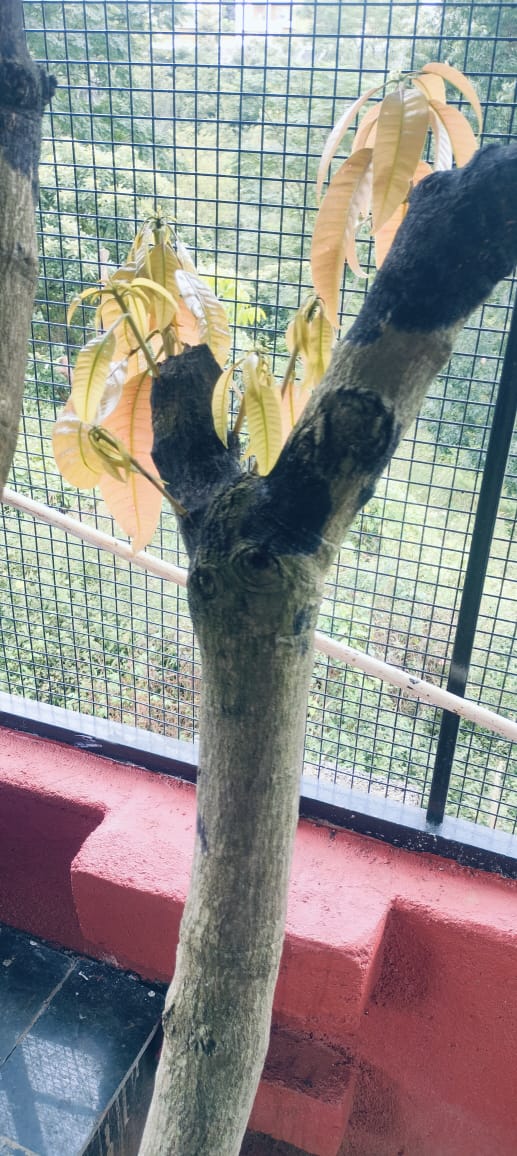
Across the globe, in both rural and urban spaces, there is a renewed fascination for organic farming and sustainable gardening practices, propelled by the growing realization that the answers to many of our agricultural challenges may lie right at our doorstep. In my own backyard kitchen garden nestled in rural Karnataka, this philosophy is more than a passing trend—it forms the foundation of natural farming experiments.
Over the past week, I embarked on a particularly intriguing trial that intimately combined home-scale waste management with plant care: the integration of biogas slurry and banana enzyme, both generated from household organic waste streams, as a growth stimulant for various fruit trees.
What transpired was nothing short of remarkable and offers a compelling case study in how household sustainability solutions can unlock botanical vitality—and possibly, new holistic science as per law of nature.
The initial idea came from an amalgamation of curiosity, ancient Indian wisdom, and a stubborn desire to reduce waste while nourishing the land.
Biogas slurry, a nutrient-rich byproduct of anaerobic digestion from my home biogas unit, had always been a reliable organic fertilizer in my repertoire, maintaining soil fertility and aiding general plant health.
Banana enzyme, on the other hand, was a new addition, prepared by fermenting discarded banana peels in a jaggery solution and active yeast—a practice often cited in permaculture and natural farming circles for its enzyme content and reputed capability to trigger beneficial soil biology.
It occurred to me that if both these byproducts could offer tangible benefits individually, perhaps, in unison, their impact on trees could be amplified.
My experiment began with a single, mature mango tree that had shown little new growth since the onset of the season.
I prepared a mixture of freshly extracted biogas slurry, still warm from the digester, and an aged banana enzyme solution. Pouring this mixture in a ring around the tree’s root zone, I hoped to see some improvement by the end of a fortnight, perhaps a modest greener flush or incremental growth. To my astonishment, within just 24 hours, tiny red-tinged branches began to break through the dormant buds, signaling a dramatic reactivation of growth. The branches were not just emerging but seemed to be growing vigorously, an effect more pronounced than observed following regular compost or cow dung slurry applications.
Encouraged, I repeated the process on one more mango tree, selecting specimens that had demonstrated similar stagnancy in vegetative growth. I maintained consistent conditions—applying the slurry and banana enzyme mixture at the branches and avoiding any other interventions that could confound the outcome. Again, the tree responded in tandem with the first, sprouting new branches in less than a day. The replication of this striking result led me to question whether this phenomenon was specific to mangoes or if it might extend to other fruit species. My curiosity led me to experiment with a guava tree—generally more forgiving to a variety of inputs and already accustomed to standard organic practices in the garden. The response was identical: fresh branches pushing through the canopy in just 24 hours.
It became clear that these results were not simply isolated incidents or coincidences. Instead, the pattern pointed to a consistent physiological response across different species. The immediate question was, what exactly was happening at the biochemical and ecological levels to trigger such rapid and visible growth responses? At the heart of my backyard, a hypothesis began to take shape: the biogas slurry, loaded with readily available nitrogen, phosphorus, potassium, and micronutrients, likely created a nutrient-rich microenvironment. Meanwhile, the fermented banana enzyme, abundant in natural organic acids, enzymes, and possibly plant growth-promoting substances like cytokinins and auxins produced during fermentation, may have acted as a biological catalyst. The interface of nutrient abundance and enzymatic action may be breaking the dormancy of latent buds or stimulating cell division and elongation at a rate surpassing routine organic treatments.
Yet, such an intriguing result calls for scientific humility and a healthy skepticism. Anecdotal observations, while valuable for generating hypotheses and directing inquiry, cannot substitute for rigorous, evidence-based research. Several critical questions warrant investigation—what are the underlying biochemical pathways triggered by this particular combination of waste-derived inputs? Is the stimulation of branching due to a hormonal shift in the plant’s physiology, alterations in root exudate profiles, or a spike in microbial activity around the rhizosphere?
Given that the banana enzyme is not a clearly defined compound but a complex microbiological mixture, what specific organisms or metabolites are responsible for catalyzing growth? Furthermore, does this effect persist across different climatic and soil conditions, or is it unique to my backyard’s microenvironment and the exact composition of my biogas and enzyme brews?
There is also the question of sustainability and scalability. While my results are promising in a controlled, experimental setting, can similar outcomes be replicated by home gardeners elsewhere or at a larger, community scale? Might there be long-term impacts on tree health, broader flowering, and fruit production that remain invisible in this early growth stage? Even as I delight in the visible flush of green and red against the soil’s brown and the autumn sky, I remain conscious that single-season gains in vegetative vigor do not always translate to improved yield, resilience, or overall ecosystem health. Home gardening, especially when driven by a sustainability mindset, involves striking a balance between enthusiastic exploration and respect for the subtleties of nature’s processes.
What is certain, however, is that integrating waste into productive cycles—moving from a “throw-away” mentality to one of creative reuse—holds transformative potential. The combination of biogas slurry and banana enzyme demonstrates that so-called “waste” can be harnessed not merely for passive soil improvement but as an active agent in stimulating rapid and robust plant development.
Nature’s circularity reveals itself with elegance in the backyard: yesterday’s kitchen scraps fueling tomorrow’s abundance, all through mechanisms we are just beginning to understand.
My experiences, though rooted in a single kitchen garden in rural Karnataka at the outskirts of Bangalore City, resonate with a global movement. Across India and the world, gardeners and small farmers are re-discovering the value of on-farm resource cycling and experimental agroecology. Therefore, by sharing these observations and inviting others into the conversation, the hope is not to present a finished formula or universal solution, but to ignite curiosity and motivate community-driven scientific research.
If others can replicate, refine, and document similar results—while scientists investigate the mechanisms with rigor—the humble backyard may once again become a cradle of innovation for resilient and sustainable agriculture.
If you have ventured into the world of biogas byproducts or homemade plant enzymes, your observations and reflections are invaluable. Each garden, each season, and each combination of inputs adds to our collective understanding, inching us closer to farming in harmony with ecological principles.
In the meantime, I will continue documenting and refining these small-scale experiments, trusting that each new bud on my trees is not merely a triumph over dormancy, but a reminder of the creative power hidden in our everyday choices—and in the kitchen waste we so often overlook.
By Pritam Kumar Sinha
