

April 2024
Death: a comma in consciousness
The fear of death is the fear of existence coming to an end. So, to prepare yourself for the inevitable, wouldn’t it make sense to ask ‘What is existence?’ as well as know more about death and its related aspects? You can set the ball rolling by reading this well-researched article by Dr Bijal Maroo, peppered with the experiences of those who have borne the loss of their dear ones
I remember the two times I came face-to-face with death. I was about six years old and my maternal grandfather had expired. Since he had undertaken Santhara (a Jain religious practice of voluntarily fasting to death) before his passing, it called for a celebration of his death. The body was prepared to go in a palanquin and was kept in a sitting posture, with sandalwood paste smeared on the forehead and cotton plugs in the nose. It was all too much for me to take. I was terrified.
The second time was when I lost my nephew. He was born with severe hydrocephalus (a condition when there is excess cerebrospinal fluid filling the brain ventricles). We knew on the day of his birth that he would pass very soon. In a split second, that day changed from one of celebration to one of mourning. I could not grieve; I had to have my wits about me. I was the doctor in the family and had to deal with this medical challenge that life had thrown. I had to be strong. My sister, brother-in-law, and the rest of my family were completely in the throes
of grief. Sohail was an extremely good-looking baby—very fair, with a long slender torso and a head full of hair—but unfortunately, he would not survive.
Five stages of grief
In 1969, Elisabeth Kübler-Ross, a Swiss psychiatrist, defined five common stages of grief in her book On Death and Dying. The book resulted from her observations while working with terminally ill patients. The rider here is that these stages might not occur in the order stated and that some people don’t undergo any of them. A few others might undergo only a few stages instead of all the five that are described below:
• Denial
A lady I interviewed (let us call her Revathi) spoke about how she refused to believe that her husband was no more after he was snatched away during the COVID-19 pandemic. Revathi was in a state of shock and disbelief. She kept thinking that this could not be happening
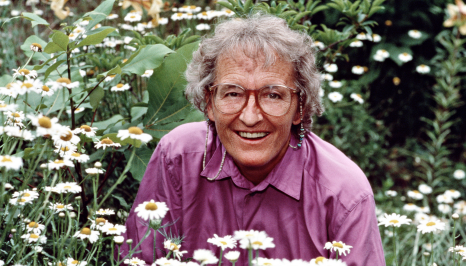
Elisabeth Kübler-Ross, a Swiss psychiatrist who outlined the five stages of death
Interestingly, it is denial and shock that help you cope with and survive the grief event, says Kübler Ross. Think of it as your body’s coping mechanism to allow only as much as it can handle at one time to enter the consciousness. However, her daughter knew that she would never confront the reality and hence forced Revathi to see her husband’s dead body.
In her autobiography, Healed, film actress Manisha Koirala remembers laughing with disbelief on being told that she had cancer. She thought, Others have cancer. How could I have it? I was healthy, ate well, and exercised well. No, no, there must be a mistake!
Interestingly, it is denial and shock that help you cope with and survive the grief event, says Kübler-Ross. Think of it as your body’s coping mechanism to allow only as much as it can handle at one time to enter the consciousness.
• Anger
When they were informed about my nephew Sohail’s dire diagnosis, my sister and brother in-law were enraged. They were angry that God had been unjust and unkind. My sister would, thereafter, express her resentment whenever she saw a careless mother let her child run onto a busy street, unsupervised. The rest of the family was reeling under the gossip-mongers’ insensitive questions as to what was wrong with Sohail.
Many times, we ask the question, Why me? or declare, Life’s not fair! Even fervent believers find their faith shaken as they question or blame God for the wrong that has befallen them.
• Bargaining
It is sad but, most often, our relationship with God is like a business transaction and we constantly ask Him for favours. When some tragedy strikes, we slip into our default mode of bargaining. We all know that the only truth about life is that it changes; it changes all the time. Yet, as soon as the downward phase starts, we try every possible strategy with God, hoping He will revert our life to what it had been before this turning point.
Sometimes, guilt plays a big role as a trigger to the bargaining process. What if I had listened to my gut? What if I had cancelled my travel plans and taken her to the doctor earlier? What if I had not forced him to attend the party? The accident would never have happened! These and similar thoughts make the survivors want to turn back the clock.
• Depression
I quote from the diary of a friend who very generously opened up her grieving heart for me:
Lead Story 29
Life seemed to have settled down after all the roles and regulations had been met and the goalpost was sighted.
All those which I thought were pertinent to achieve a better tomorrow, obstacles surmounted, bridges crossed, good deeds done, and boxes ticked, and then you pulled the carpet from under my feet.
Now it all seems so meaningless when I didn’t know what your itinerary for me was.
Yes, I knew you held the rudder and your ways are unfathomable. But I didn’t think the hairpin bend would be so acute, that the view I had so far, would be so blighted.
So, do I fear your next move around the next bend or have an all-encompassing dictum of ‘Blessed is he who expects nothing’?
This lady avoids talking or thinking about her soulmate as she feels that she will drown more and more in her well of grief. There are times when she just can’t stop weeping, and she feels like she is sinking into a bottomless pit. The finality of it all is what pains her the most. In her words, “He has dissolved forever!”
• Acceptance
A doctor friend of mine lost her mother in July
last year. As she scoured the internet for some ways to deal with it, she came across a video by Sadhguru Jaggi Vasudev, wherein he says, “You must celebrate all that the departed soul has done for you. If you continue weeping, you are giving trouble to that soul and that is best avoided. You should let them go and be happy.” She bought this idea and does not sit around moping. She says, “Whatever has happened is over; you cannot do anything about it.” She has plunged herself into charity work and attends karaoke singing sessions. She also makes it a point to pray for her parents every day.
A lot of adjustment and readjustment happens and people move on, although some things change permanently because of the tragedy.
Revathi underwent therapy for two years and distracted herself with language tuitions and writing groups, all of which she found therapeutic. She is healing slowly, yet she still cannot bring herself to wear her bright red sarees, now that her husband has passed.

Depression often follows the loss of a loved one Many times, we hear of a young mother who cannot indulge her grief as she has tiny tots who depend on her. What about army widows? They must not shed tears as it will diminish the memory of the brave husband. The hit Hindi movie Mohabbatein tried to spotlight the plight of army wives. Imagine not knowing if your husband is alive or dead and, if alive, whether he is being tortured in the enemy camp!
Lack of closure and lingering grief COVID-19 saw many families losing multiple members in one go. For them, it was like a relay race from a horror movie. The highly virulent nature of the infection impelled the authorities to intervene and cremate bodies without allowing an antim darshan (the final paying of respects to the deceased) for the families of the deceased. Many did not find closure, and the grieving process lingered on for months without respite. I remember my friend telling me about her uncle who passed away in the hospital while his wife battled for her life in another hospital room, unaware that she was now a widow. In a bid to protect her as she was perilously close to losing her life, the family kept the news from her. When she recovered, it hit her like a ton of bricks. She kept mouthing the words “Nobody even told me that he had left.” Sadly, she succumbed to her grief within a month, even after having survived the deadly virus.
Many times, we hear of a young mother who cannot indulge her grief as she has tiny tots who depend on her. What about army widows? They must not shed tears as it will diminish the memory of the brave husband. The hit Hindi movie Mohabbatein tried to spotlight the plight of army wives. Imagine not knowing if your husband is alive or dead and, if alive, whether he is being tortured in the enemy camp! What should she pray for? Will he ever come back? For every officer who goes missing in action, there are two lives trapped in no man’s land.
Treatment of grief
The mainstay of treatment is to seek out a counsellor and support from family and friends. In our Zen Pen group of writers, helmed by Suma Varughese, at least two to three people have found solace and a safe space to express their grief. Medicines might be needed in extreme cases. However, since medicines mask the symptoms, a false sense of well-being could set in. Often, the psychiatrist and the patient would both find it difficult to judge when true recovery has set in.
Decoding our fear of death
We all know the tale of Yudhisthira facing the questions fielded by the Yaksha (the guardian spirit) of the poisonous river. “What is the biggest wonder of life?” asked the Yaksha. The eldest Pandava was wise and learned. Without batting an eyelid, he answered, “Hundreds and thousands of living beings meet death at every moment, yet the foolish man thinks himself deathless and does not prepare for death. This is the biggest wonder of life.”
Once, during a bout of depression, I thought that death would be better than being alive. One night, after having got myself considerably in a stew over these horrid thoughts, I drifted off to sleep. But I was jolted awake by a nightmare, in which I visualised looking down at my hands, realising that all the lines from my palms were missing! Despite all my dark thoughts about wanting to die, staring death in the face—even symbolically—scared the hell out of me. After
that, I have never again entertained the idea of letting go of my life-line.
Yet, the question arises, ‘When death is inevitable, why are we so petrified of it?’
• Discussions about death are taboo Anything that we refuse to talk about remains shrouded in mystery. Dr Trupti Jayin decided to initiate conversations about this taboo topic through her YouTube series ‘Mritunjaya.’ (https://m.youtube.com/ watch?v=R5DAuzoschE&t=216s). She says, “Death is inevitable; then why can’t we talk about it and about how to face the loss? We celebrate life, so why not celebrate death? We die every day. Sometimes, it is through a job loss, monetary loss, some failure in life, or a marriage not materialising. Moving on is the universal law.”
Anamika Chakravarty is a holistic well-being

Yudhisthira answering the most confounding questions asked by Yaksha
“Each moment, death is happening in us at the organ and cellular levels. Death began in us even before we were born. Only if you are ignorant and unaware does it seem like death will come to you someday later. If you notice that with every inhalation there is life, with every exhalation there is death.”
coach who focusses on death and grief. After her tryst with cancer, she desired to donate her body for medical research. However, whenever she broached the topic, everyone in her family hushed her. Finally, she took to writing emails to her own family so that someone among them would acknowledge her wish.
• Death is unknown and hence to be feared Kathryn Mannix is a doctor specialising in palliative medicine (care for patients having advanced and incurable ailments). “Doctors are trained to stop people from dying,” she says. Maybe that is why we all look upon death as the enemy and feel terrorised when it draws near.
In her TED talk, she describes a life-changing experience when her senior at the hospice described ‘The End’ to a patient who was inching toward her death. The doctor told her that towards the end, patients sleep more and are awake less. Slowly, they slip in and out of consciousness, and only breathing continues unabated. At one point, very simply, the breath goes out, but no breath comes in. The lady realised that death was not half as dramatic as shown in the movies. Knowing that there would
34 LifePositive | APRIL 2024
be no panic or fear in her last moments, she stopped fearing death.
• We are too identified with the physical form
In the movie Uri, the protagonist’s brother-in law dies during combat. His sister clings to her husband’s clothes as their smell is reminiscent of him.
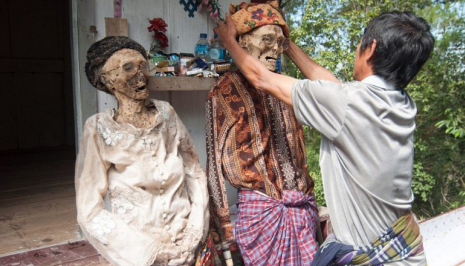
In Indonesia, an ethnic group called Torajans, who inhabit the mountainous region of South Sulawesi, follow a strange ritual known as ‘Ma’nene,’ which means ‘the ceremony of cleansing corpses.’ Once every three years, they take their deceased loved ones out of their coffins and clean them. They offer them food, water, and cigarettes, and dress them in new clothes. This ritual helps them keep the connection with the deceased loved one alive.
We are all identified with the tangible ways in which we experienced our loved ones before they departed. Left bereft of their bodily existence, we are lost completely. Their timeless but abstract essence or soul is too much of an enigma and offers us no comfort.
Facing our mortality
We need to realise that death is constantly walking alongside us. Die with Zero author Bill Perkins says that we die many deaths before we actually die. When the infant dies, when the quirky, rebellious, fun teenager dies, when the single person dies, and when the parent of young kids dies. When you can no longer hike and when you can no longer party all night, you die. These milestones of our life will never come back.
Sadhguru Jaggi Vasudeva adds to this idea: “Each moment, death is happening in us at the organ and cellular levels. Death began in us even before we were born. Only if you are ignorant and unaware does it seem like death will come to you someday later. If you notice that with every inhalation there is life, with every exhalation there is death.”
Practical ways to deal with death
• Tête-à-Tête with death
Anamika Chakravarty, who is also into Death Coaching, uses the Dialogue with Death exercise with cancer patients. Here are some sample questions:
• What will you lose and miss most when you are gone?
• What unfinished business do you have left? What can you do to bring completion and closure?
• What is your main message—your lasting legacy—for your loved ones? Why is this so important to you?
Such questions help her clients get a handle on the process of living. Soon, death is no longer an ogre to be feared.
• Seeking out a death doula
The word ‘doula’ means ‘midwife.’ Death doulas, or end-of-life doulas, assist in the dying process. This is a profession avidly practised in the United States. Death doulas look after the dying person so that family members are no longer obliged to be caregivers. Thus, the
Lead Story 35
family can truly spend their last days together more meaningfully. They also look after the legacy work, including the spiritual wills (a compilation of the values and insights of the dying person) and organise the funeral service.
• Searching for answers and meaning In my case, I knew that it was better that my nephew, Sohail, passed on. I did not grieve till much later. When I finally did, I coped with grief on an intellectual level. I read books and searched for answers. I read the book When Bad Things Happen to Good People by Harold Kushner. The gist of his message is that events we consider bad result from randomness. God is never unfair nor does he punish us. Also, our suffering does not stem from our misdeeds. An event transpires because the Universe seeks balance and order. Unfortunately, it happens to you. This appealed to me, and I moved on with my life.
• Organising a living funeral
In Mitch Albom’s book Tuesdays with Morrie, Mitch’s former professor, Morrie, was dying of amyotrophic lateral sclerosis (ALS). He wanted to hear all the good things about him that would be said at his funeral. So he held a living funeral. This idea is for the brave and quirky, but it might be worth trying if death is sitting outside your doorstep.
• Gratitude
Every year, on her father’s death anniversary, Anamika and her family reminisce about the good times they spent with him. Gratitude for the good memories helps one to heal and move on.
• Journalling
Keeping a journal is a sure-shot way of expressing your feelings. Only things that are expressed finally heal.
Preparing for death
Harold Kushner writes, “We can’t explain death, and we can’t control it. All we can do is try to rise beyond the question, ‘Why did it happen?’ and begin to ask the question, ‘What do I do now that it has happened?’”
• Living before dying
In her TED talk, a death doula, Alua Arthur, very aptly states, “You don’t fear death if you have really lived!”
Alua describes one of her clients who was dying of cancer. When she tried to uncover what things brought meaning to her life, she found that it was the little things—her garden and working her hands in the soil. She also loved to eat but had dieted for most of her life, so she started eating and enjoying her food through the aromas as she had lost her taste sensation. Alua says, “We are all going to die, so please eat the cake and the French fries. One day, you won’t be able to anymore.”
So, if you are postponing that candle-light dinner with your spouse, a solo trip to the Amazon forests, a trip to Imagicaa Theme Park with your kids, sleeping under the starlit skies, watching the aurora borealis, catching up with old friends, or writing that book, do it NOW!
• Practising mindfulness
It is often seen that the passing of a loved one or a brush with death propels people to take to spirituality. My brother-in-law, a surgeon by profession, had a close encounter with death. The bus he was travelling in veered off the road, and he could have plunged to his death in the deep ravine below. However, he survived miraculously with just a few scratches. Realising that this was his rebirth, he rapidly trained his sights on the spiritual path and was later ordained as a Jain monk.
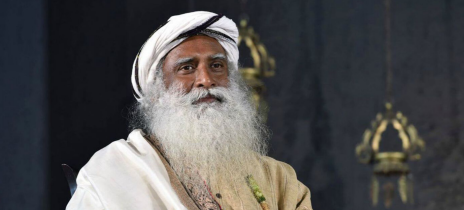
Sadhguru Jaggi Vasudev says that death exists only to those who have no awareness of life. In his book Life and Death in a Single Breath, Sadhguru explains, “Mahasamadhi is when someone leaves their body while being in a state of full awareness. The word ‘samadhi’ comes from the words ‘sama’ meaning ‘equanimity’ and ‘dhi’ meaning ‘buddhi,’ or the intellect. In Mahasamadhi, one drops the body by choice. There is no question of rebirth. Thus, they attain mukti, nirvana or moksha. In reality, there is no such thing as death. Death exists only to one who has no awareness about life.”
A daily practice of mindfulness sharpens the skill of being in a constant state of awareness. Thus, it can pave the way for a conscious death at the end of our life.
The Buddhist tradition advocates a meditation practice called Maranasati (mindfulness of death). This helps remind practitioners that death might come as soon as the next day, the next meal, or even in the next moment. Buddhaghosa, a 5th-century Indian Theravada Buddhist commentator, translator, and philosopher describes such meditators: “Perception of impermanence grows in him, while beings who have not developed [mindfulness of death]fall
victims to fear, horror, and confusion at the time of death.”
Celebrating death
Can death be a celebration? The answer is a resounding, “Yes!” As described, my grandfather’s death was celebrated because the ability to complete Santhara was believed to take his soul to higher realms. Families of deceased army personnel celebrate their death as they died national heroes.
The Satiyaa community, a Gypsy tribe in Rajasthan, considers the deaths of their loved ones as the happiest of life events. The family and friends wear fresh clothes and dance to the tune of drums while the dead body is taken to the crematorium. After the funeral pyre is lit, the tribe members continue to dance and make merry until the body is completely reduced to ashes. They feast on liquor and sweets especially purchased for the occasion. This celebration stems from the belief that death liberates the soul from bodily imprisonment. According to them, the process of birth and life are punishments for our sins.
Making death palatable
We all want to know what will greet us on the other side when we cross over. But why imagine the worst? Since everything we know about the end is a figment of our imagination, why not use it to manifest a more positive end? Aula Arthur has described a magnificent setting for the last frame of her life.
I have let my imagination run amok and created my own, inspired by her.
I would croon my favourite songs while the music was played by a huge orchestra, savour all my favourite tastes like mango juice, chikoo ice cream, tangy panipuri, and chocolates consecutively, smell my favourite petrichor and baby powder, see moon dogs, iridescent clouds, and multihued birds, feel the warmth of my loved ones’ hugs, and soft rain falling on me. It all ends in a crescendo of iridescent lights and stars falling on me, my family, and my friends as I merge into the Universal Consciousness, feeling safe and loved.
Feel free to script your own.
Messages from the other side
Since life is a continuum, death is just a pause in this process of living. We are always connected to our loved ones even after their deaths. There is a panoply of methods out there if you wish to communicate with your loved ones and receive messages from them.
Psychics and mediums who channel the spirits of deceased souls can help us. In the book Where One is Not a Number, Anil Raheja, who lost his 12-year-old son, learned automatic writing,
or psychography, to allow his son’s messages to come through.
Mo Gawdat, the chief business officer at Google X, wrote his best-selling book, Solve for Happy. He wrote the book immediately after losing his 21-year-old son, Ali, to a botched-up appendectomy. Whenever Mo and Ali played their favourite video game, Ali was very adept and would get to a higher level much before his dad. Then, he would tell his dad to take his time and reassure him that he would be waiting for him. After he died, a song kept playing in Mo’s head. Soon, he realised that it was the music from their video game. Ali had found a way to tell his dad that he needed to complete his work on the planet while he (Ali) would wait for him on the other side.
We could stop identifying with the physical form that our deceased loved ones adorned. If we can detach ourselves thus, we might experience their souls. Soon the messages from the other side can pour in with ease. The heart always goes on, as in the popular song from Titanic.
Every night in my dreams
I see you, I feel you
That is how I know you go on
Far across the distance
And spaces between us
You have come to show you go on
Near, far, wherever you are
I believe that the heart does go on
Once more, you open the door And you’re here in my heart And my heart will go on and on
Dr Bijal Maroo is an art based therapy practitioner, homeopathic consultant, coun selling and health psychologist since 20 years. She reflect on life through her gifts as a writer, poet and singer. Contact- drbijjalmaru@rediffmail.com or visit www.drbijalma roo.com
